Dirty kitchen hoods: why heat and smoke build up
A commercial kitchen hood is meant to move hot, smoky air away from cooking equipment and out of the building. When grease and grime collect in the hood, filters, ductwork, or exhaust fan, that path becomes harder to travel. The result is often a kitchen that feels hotter, smells stronger, and holds smoke longer than it should.
This is why hood ventilation cleaning matters beyond appearance. A clean system helps air move as designed. A dirty one adds resistance, traps heat, and can let cooking byproducts spread into the room instead of leaving through the exhaust.
What a kitchen hood is doing
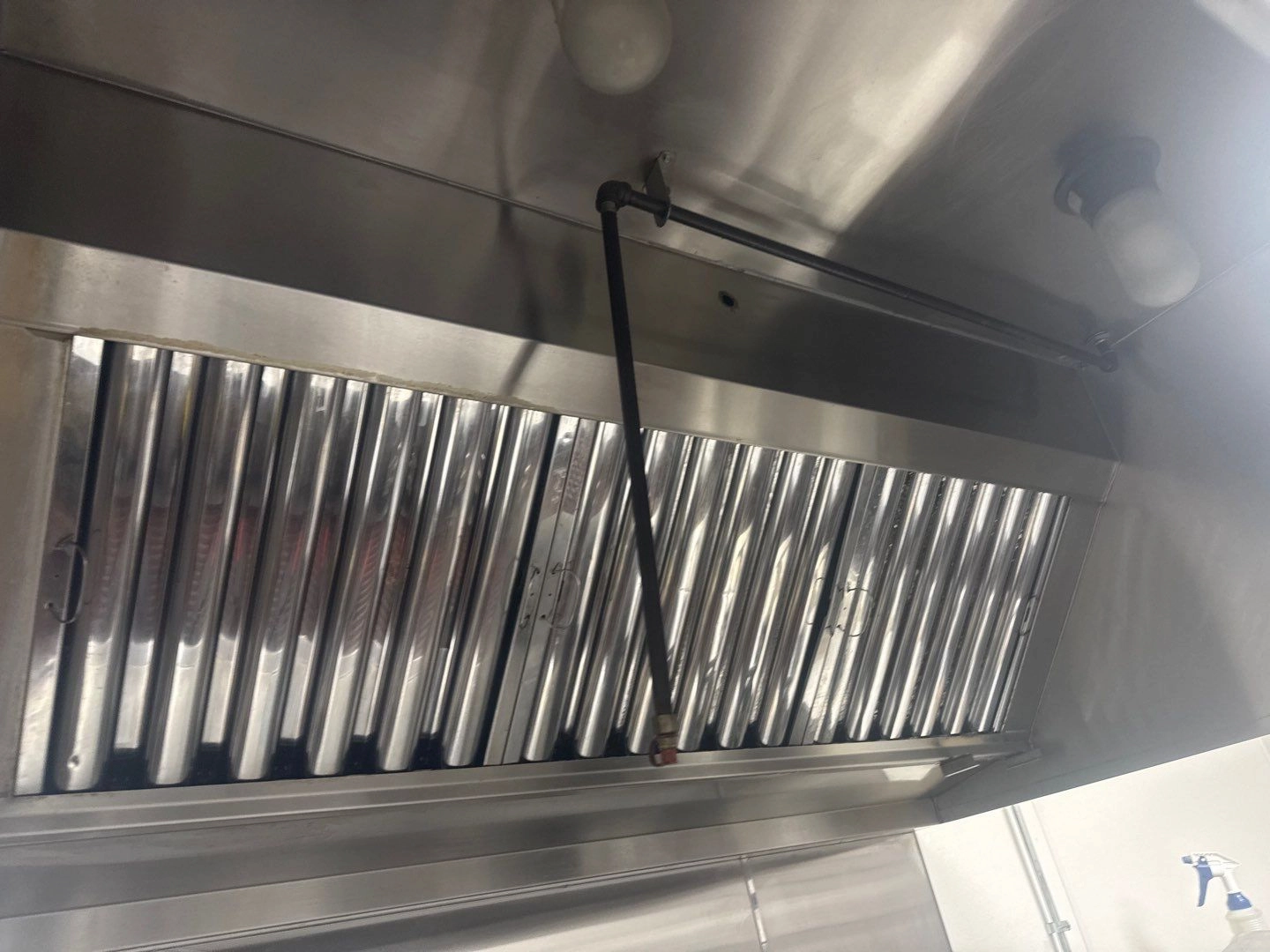
A hood works as part of a larger exhaust system. Cooking surfaces release heat, Smoke, Odors, and grease-laden vapor. The hood captures that rising plume and sends it into ductwork. Grease filters catch much of the grease before air reaches the rest of the system. The exhaust fan then pulls air through the duct and discharges it outside.
Makeup air also matters. Air that leaves the kitchen has to be replaced. If replacement air is restricted or poorly arranged, the exhaust fan may struggle to move the volume the system was designed for. Doors, vents, and room layout can all affect how smoothly that exchange happens.
When each part is clean and balanced, the hood captures rising air near the cooking line and carries it away. When one part becomes clogged or coated, the whole system loses efficiency.
Why a dirty hood makes the room hotter
Heat leaves a kitchen in two main ways: it is carried out with exhaust air, or it stays in the room and spreads through surfaces and air currents. A hood full of grease does not capture as effectively. Some of the hot plume escapes around the edges of the canopy before it enters the duct.
Grease filters loaded with residue also narrow the openings that air must pass through. That restriction reduces the amount of air the exhaust fan can move. The fan may still be running, but it is working against a blocked path. Less exhaust means less heat removal.
Ducts can add to the problem. Grease film and debris build up along internal surfaces, roughening the path and reducing usable space. Over time, the system behaves less like a clear channel and more like a partly blocked pipe. The cooking equipment may be doing the same job, yet the room feels warmer because the heat has nowhere easy to go.
This is one reason scheduled maintenance for cleaner kitchen airflow is often treated as part of kitchen operations rather than a cosmetic task. Clean airflow supports a more stable working environment, especially during busy cooking periods when burners, griddles, fryers, and ovens all release heat at once.
Why smoke and odors linger
Smoke is a visible sign that combustion or cooking particles are staying in the air longer than intended. A hood with poor capture pulls less of that plume upward. Smoke can drift sideways, hover around the cooking line, or move into dining and service areas.
Odors behave in a similar way. Many odor molecules travel with hot air and grease vapor. If filters are saturated, they stop catching as much residue and can hold stale smells. If the fan cannot pull enough air through the duct, cooking smells remain in the room instead of being exhausted.
A clean system helps reduce that buildup, but it still depends on correct airflow. A powerful fan cannot fully compensate for a dirty filter, a blocked duct, or poor makeup air. The best results come from looking at the whole path, from the hood face to the point where air leaves the building.
Where dirt tends to collect
Grease moves with warm air. As it cools, it sticks to surfaces. That is why the dirtiest areas are often the places closest to the plume and the places where airflow slows.
- Grease filters, which catch residue before it reaches the duct
- The inside of the hood canopy, especially around seams and edges
- Duct runs, where grease can settle on internal surfaces
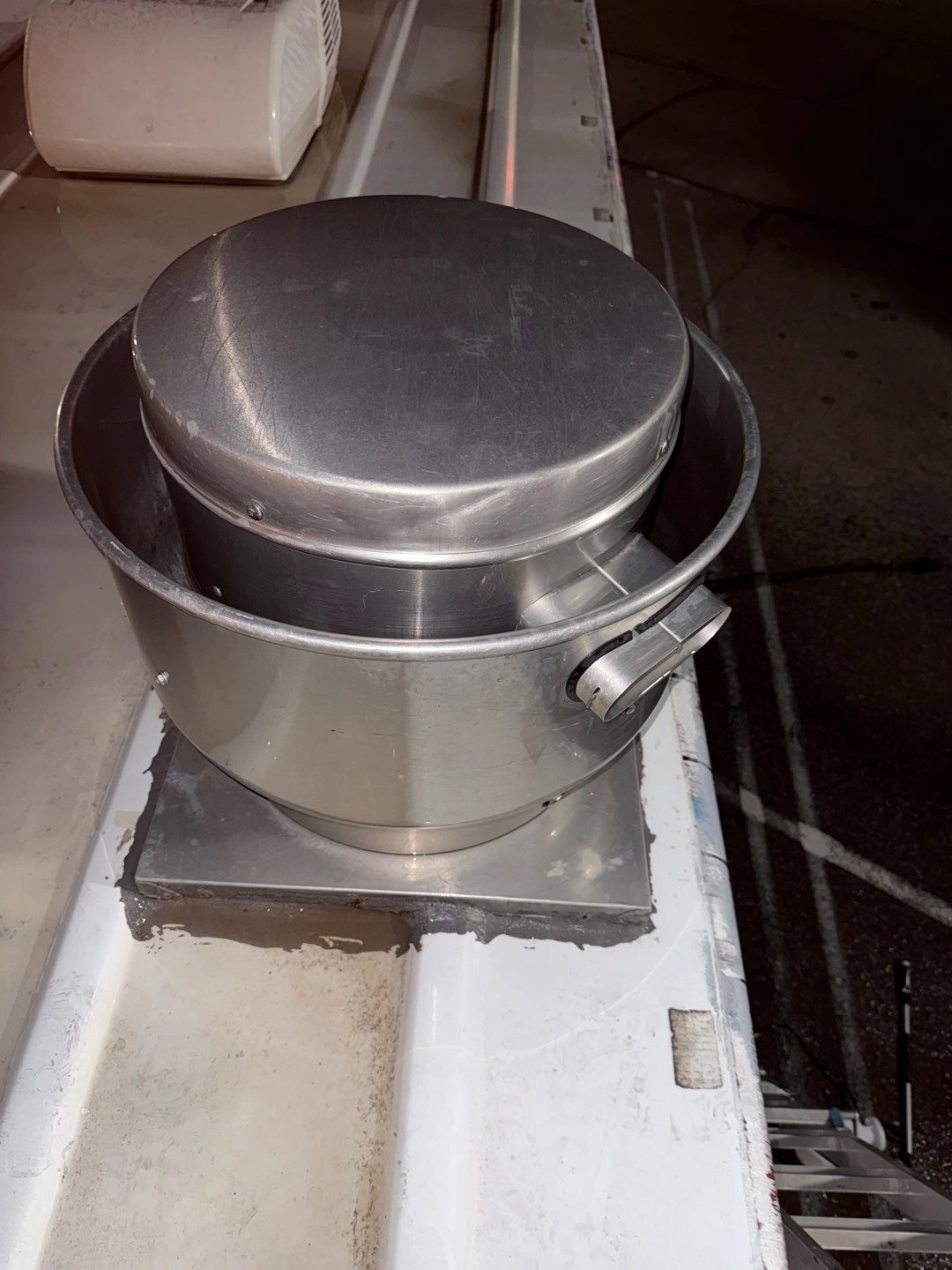
- The exhaust fan and its housing, where buildup can affect performance
- Upper areas near the rooftop or wall termination
Filter condition is usually the easiest place to notice a change. A filter that looks dark, sticky, or warped may be restricting airflow. The hood may look acceptable from the floor while the internal surfaces are heavily coated. That is why visual checks from a distance can miss the early signs of a problem.
Signs the system is losing performance
Kitchen staff often notice airflow problems before anyone studies the equipment. The signs are practical and hard to ignore once they become routine.
- Smoke hanging over cooking equipment instead of rising into the hood
- Heat building quickly near the line, even when cooking output has not changed
- Strong cooking smells moving into nearby rooms
- Visible grease at hood edges, on filters, or around duct joints
- An exhaust fan that sounds strained or different from usual
One sign alone may have several causes. A room can feel hot because of layout, equipment load, or makeup air problems. Smoke can linger because a burner is adjusted poorly or because the hood is not positioned well. Still, dirt is a common factor because it affects capture and airflow at the same time.
Regular maintenance for cleaner kitchen airflow gives a clearer picture of what the system is doing. Cleaning can reveal wear, loose parts, damaged filters, or grease collecting where it should not. Those findings are useful for planning repairs before airflow drops further.
What cleaning changes
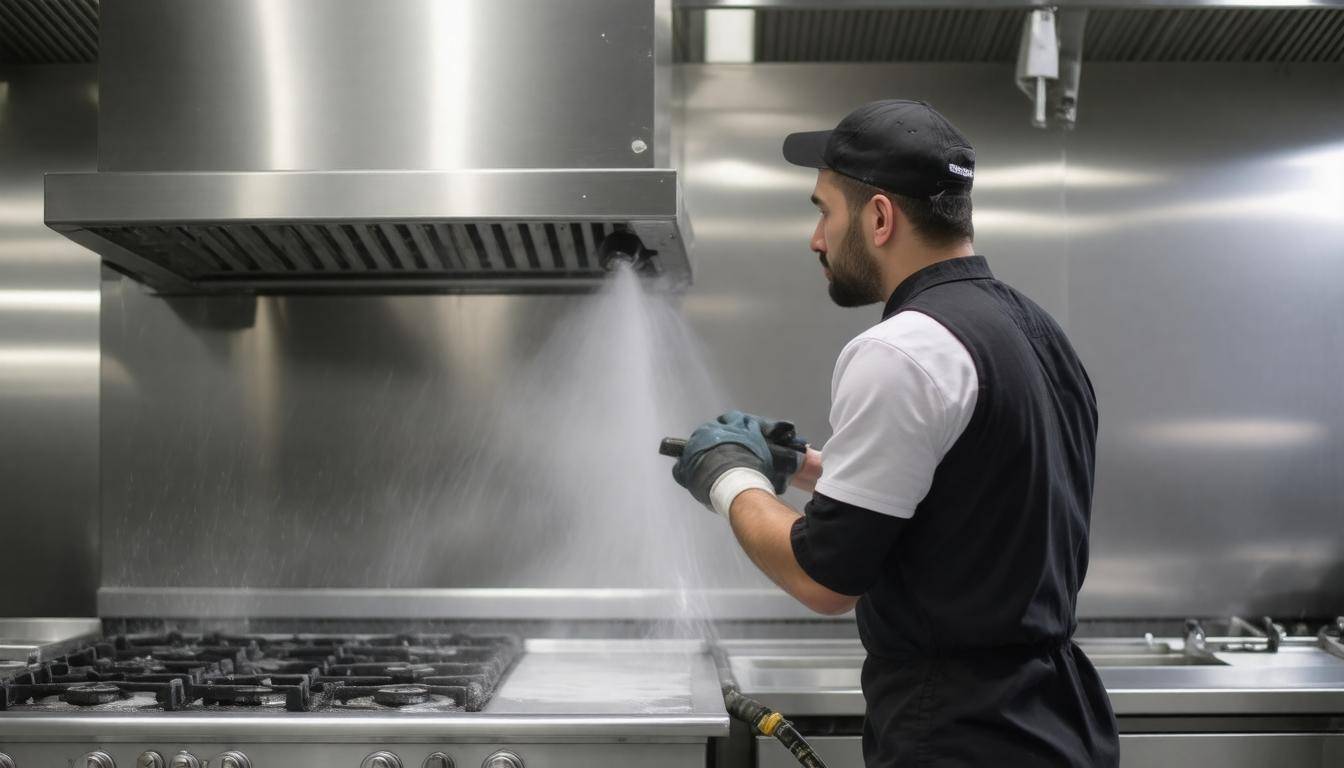
Professional hood and exhaust cleaning removes grease and residue from the parts that carry air. The exact scope depends on the system, but the purpose is consistent: restore a clear path and reduce the amount of combustible material collected in the exhaust.
Clean filters allow air to pass with less resistance. A clean canopy captures the cooking plume more effectively. Clean duct interiors reduce roughness and buildup. A clean exhaust fan can move air more freely when it is not pulling against a loaded system.
The result is not just a cleaner looking kitchen. Better capture can keep Smoke and Odors from spreading. Better airflow can help heat leave the cooking area instead of collecting overhead and spilling into the room. For restaurants, that can support comfort, housekeeping, and compliance-focused documentation.
Simple checks and limits
Some basic observations can be made without touching internal components. Look at the grease filters from a safe position and note heavy buildup, damage, or gaps. Notice whether Smoke is being drawn up when equipment is operating. Pay attention to whether the kitchen feels unusually hot during normal service.
Any deeper work belongs with a qualified professional. Internal duct cleaning, fan servicing, rooftop access, and work near electrical components can create serious risks if handled incorrectly. Safety devices and interlocks should not be bypassed or pressed into service. When a system needs opening, lifting, or electrical isolation, that work should be left to trained personnel.
A dirty hood does not make a kitchen hot and smoky in one sudden moment. It happens gradually as grease collects, filters load, airflow drops, and the exhaust system loses its ability to keep up. The earlier that change is noticed, the easier it is to keep the kitchen comfortable, manageable, and aligned with good maintenance practice.